AI adoption is not AI transformation
Most teams measuring AI success count tokens and licenses. The teams actually transforming ship different workflows and different metrics. Here's the line between the two, plus an uncomfortable test for which side you're on.
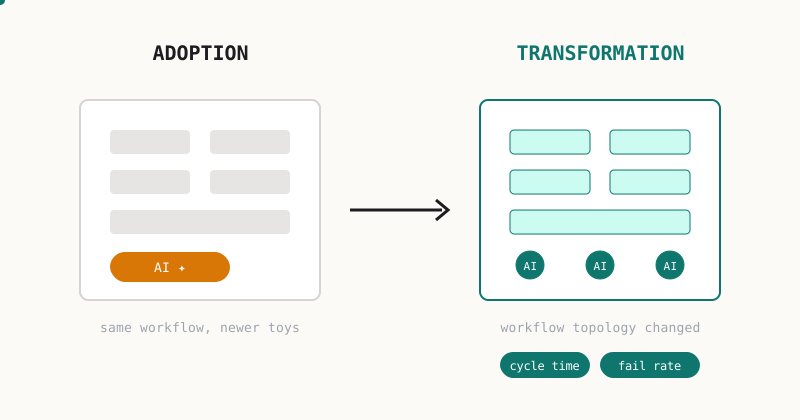
TL;DRAdoption = AI inside the old workflow. Transformation = the workflow itself changes, and so do the metrics. If your AI rollout doesn't move cycle time, change failure rate, or cost per shipped change, you've bought tools, not transformation. Call it adoption theater.
Few things I read this week:
- Cursor shipped Origin, a code host where agents open branches and propose PRs. They launched it during a GitHub outage.
- GM redesigned engineering workflows around agents and tripled merged PRs.
- A neurosurgeon closed a 22-year-old math conjecture with a 16-hour GPT-5.6 run.
- MIT and Harvard released MatrAIx: 8.3 billion synthetic persona agents to pressure-test products.
Alone, each is a headline. Read together, they say the default way we build software is changing faster than most orgs can measure or govern.
The adoption trap
Jellyfish surveyed 600+ engineering leaders this year. Only 46% track any AI-specific metric. The top adoption challenge of 2026 wasn't quality or security. It was cost.
That's the tell. Cost is a tooling concern. Nobody lists "workflow didn't change" as a challenge, because nobody's dashboard measures it.
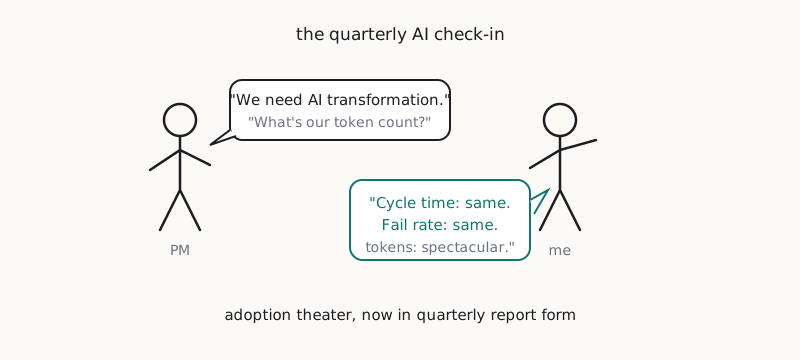
I've started calling the middle state adoption theater: copilots for everyone, a side-project agent, a dashboard counting tokens and licenses. All the signals of an AI initiative, none of the changed work. The dashboard exists so nobody has to ask whether the work itself looks different now.
What transformation actually looks like
The frontier teams changed the shape of the work, not just the tools in it:
- Code hosts where agents open branches and draft PRs, and humans do review, risk, and edge cases instead of mechanical git work.
- Synthetic personas pressure-testing your product before real users ever see it.
- Agents producing first-pass designs and proofs while humans hold the judgment layer.
Coinbase went all-in: mandated adoption, then an IDE freeze to force the shift. Whatever you think of the diplomacy, they changed the workflow. That's the part most rollouts never touch.
The difference isn't tools. It's workflow topology.
"But our metrics look fine"
This helps. It has a hard ceiling.
DORA metrics holding steady while AI spend climbs feels like success. It isn't. It's a measurement gap. Velocity metrics can't see adoption theater because adoption theater is designed to look like motion: activity up, licenses deployed, tokens counted. None of it touches what the metrics measure.
The teams past the ceiling changed what feeds the metrics:
- Cycle time from idea to production
- Change failure rate
- Review load per shipped change
- Cost per shipped change
Notice these are DORA classics. AI didn't invent new outcomes. It changed what feeds them.
The uncomfortable test
Here's the standard I hold myself to: if my AI rollout doesn't move cycle time, change failure rate, or cost per change, I haven't transformed anything. I've automated the same broken workflow with newer toys. Paid for the privilege, too.
Run that test on your last AI initiative. Failed it? Then the problem was never the model. It was the workflow you bolted it onto.
Further reading
- Jellyfish AI adoption survey (the 46% figure)
- DORA metrics, and why they survive the agent era
- My notes on review load in the agent era